

Autumn Glow: The Warmth of Fall Light in Northern Arizona: Edition 11
Northern Arizona does not need changing leaves to announce the arrival of autumn.
Here, the season can reveal itself through light.
As October settles across the high desert, the intensity of summer begins to ease. Cooler days return, shadows stretch differently across the land, and sandstone can take on a quieter range of amber, copper, orange, and deep red. For Northern Arizona fall photography, those changes create opportunities to see familiar landscapes in an entirely different way.
At Lionel Bigthumb Visuals, light has always been more than illumination. It is part of the story. Growing up near Page, Arizona, and among the landscapes surrounding Antelope Canyon gave Lionel a lifelong relationship with the forms, shadows, and changing conditions of this land. That connection continues to shape the photographs found throughout the Lionel Bigthumb fine art photography collection.
Autumn brings another chapter to that relationship.
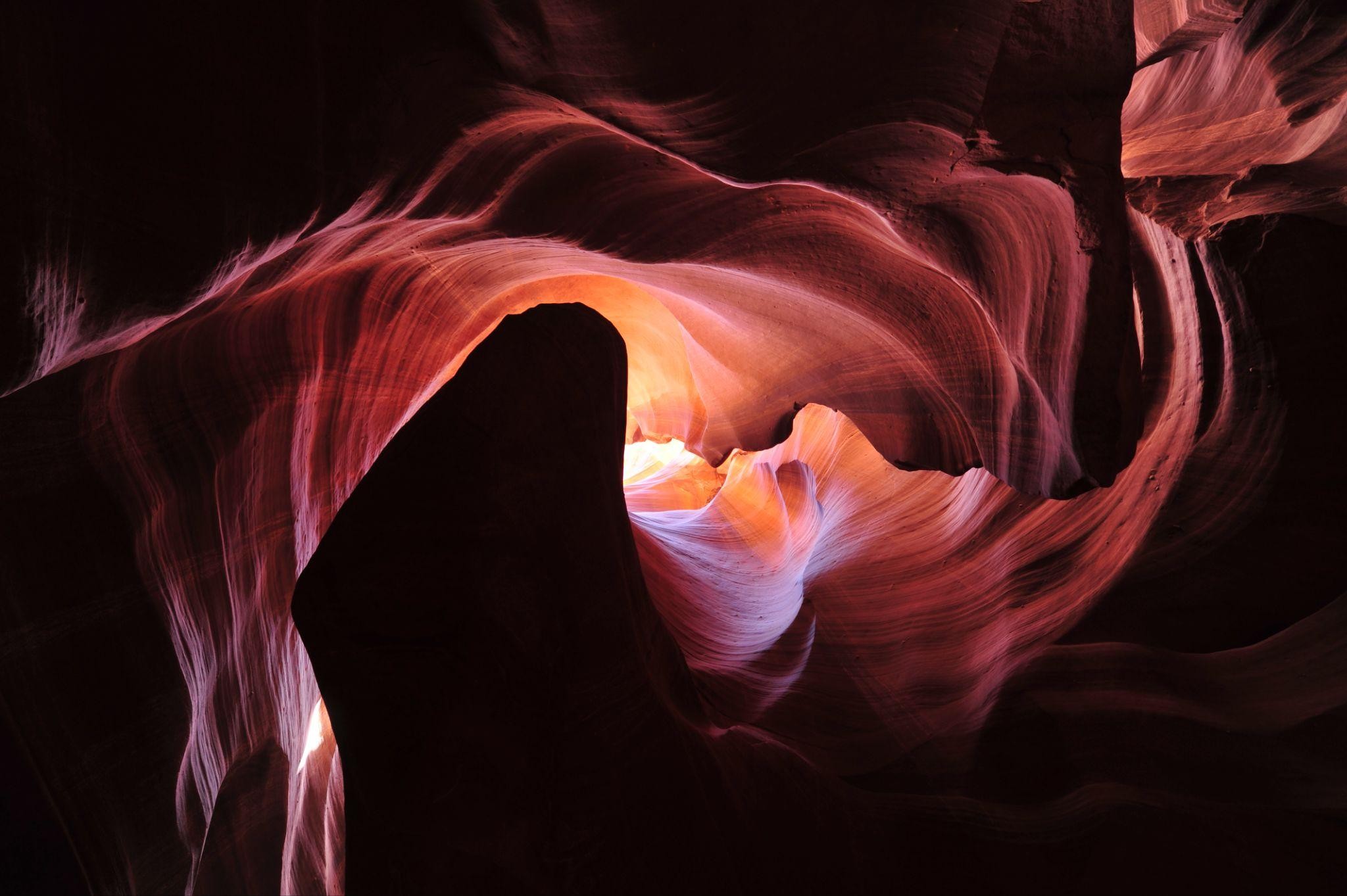
Why Fall Light in Northern Arizona Feels Different
Lower-angle light can create longer shadows and reveal surface texture in ways that overhead illumination may not. Around sunrise and sunset, it also travels through more of Earth’s atmosphere. NASA explains that this longer path scatters more of the shorter blue wavelengths, allowing more orange and red wavelengths to remain visible. NASA’s explanation of low-angle sunlight and atmospheric scattering helps explain why those hours can feel so warm and visually rich.
For a photographer, this is not simply about making a scene look more colorful. The direction of light can change which textures become visible, which curves fall into shadow, and where the viewer’s eye travels through an image.
That is especially powerful in a landscape defined by sculpted stone.
When Sandstone Holds the Light
Direct sunlight may enter through narrow openings above, but much of the color visible inside the canyon is shaped by light moving across and reflecting from one sandstone wall to another. Lionel explored this relationship in Spring Light in Antelope Canyon: Edition 5, where the changing seasonal position of the sun reveals new combinations of texture, color, and shadow.
The stone itself adds another layer.
Navajo Sandstone can display reds, browns, pinks, salmon tones, golds, and lighter colors because of differences in iron oxide within the rock. The National Park Service notes that reddish tones in Navajo Sandstone are associated with iron oxide, including hematite coatings on sand grains. Learn more about the colors of Navajo Sandstone from the National Park Service.
When warm light reaches those surfaces at the right angle, the canyon does not simply reflect light. Visually, it can seem to hold it.
That glow is one of the qualities that makes images such as Hidden Light so compelling. The piece captures light filtering through sculpted sandstone, revealing rich color, flowing textures, and passages that would otherwise recede into shadow.
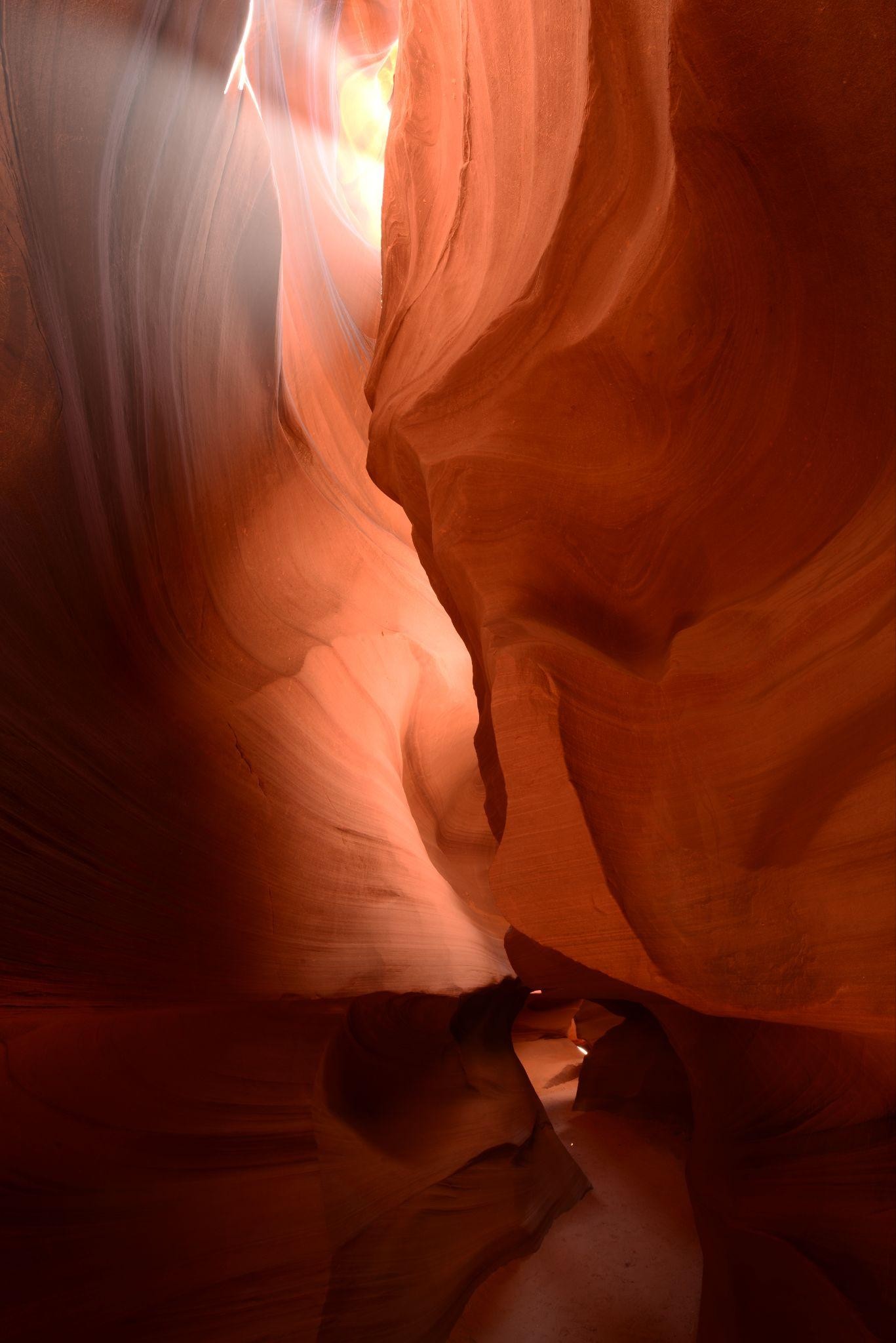
Northern Arizona Fall Photography Is About More Than Color
Fall can change the mood of the desert.
The National Park Service describes fall weather in the Glen Canyon region as generally mild compared with the extreme heat of summer. That transition can create a different rhythm across the landscape, even as conditions remain variable and desert weather still demands respect. Explore seasonal conditions in the Glen Canyon region.
In photographs, that seasonal shift can translate into quieter skies, longer transitions between highlight and shadow, and a stronger sense of depth.
A canyon wall illuminated from directly above can feel powerful and immediate. The same wall caught with light traveling across its curves can feel more contemplative. Small ridges become visible. Layers separate. Shadows become compositional elements instead of empty space.
That is where photography becomes storytelling.
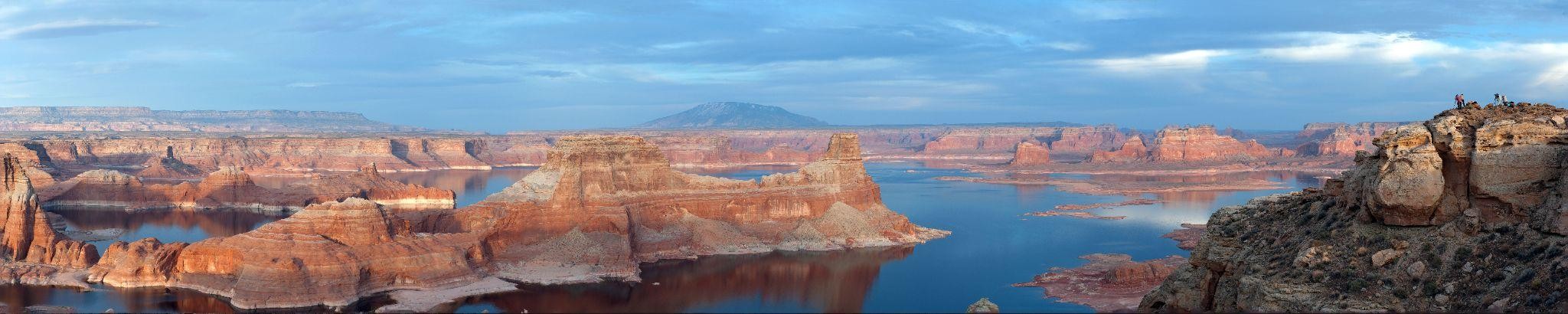
A Landscape Seen Through Lived Experience
That context matters.
Lionel’s work comes from years spent observing these landscapes and from a Navajo heritage rooted in respect for Mother Earth. His photographs are not built around treating the canyon as a backdrop. They are shaped by attention to what the land is revealing at a particular moment.
The difference may be a beam of light that exists only briefly. It may be the curve of a sandstone wall emerging from darkness. It may be a distant horizon, a star-filled opening, or a quiet transition from glowing orange into deep shadow.
Readers who want to understand more about that perspective can explore Lionel Bigthumb’s story and connection to the landscape.
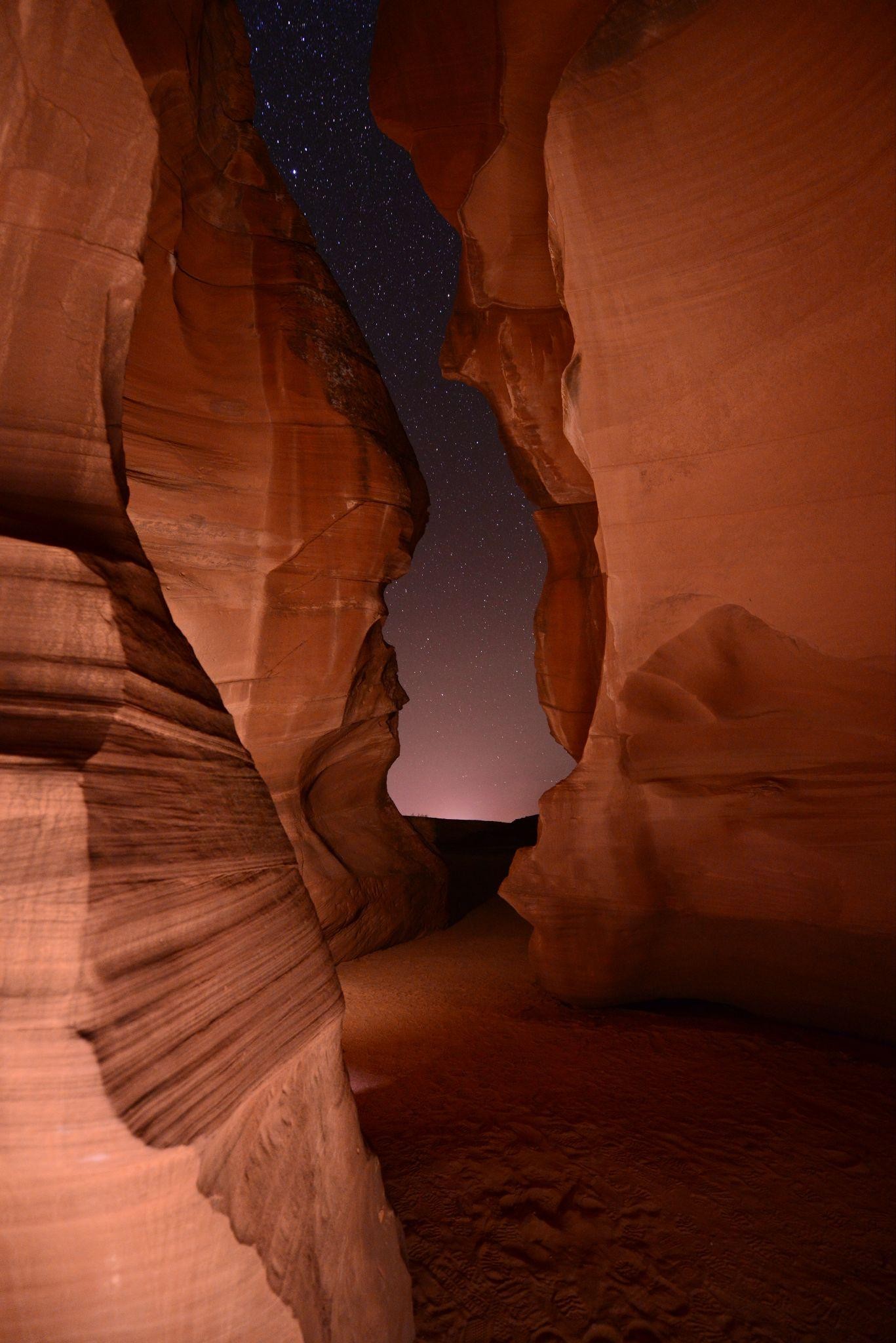
Why Softer Light Can Create Stronger Emotion
Sometimes an image becomes powerful because it leaves space for darkness.
Softer light can create gradual transitions instead of hard divisions. A formation does not have to be fully illuminated to communicate its shape. The viewer follows subtle highlights along a curve, notices texture in the middle tones, and then looks deeper into the shadow.
This is one reason autumn imagery can feel timeless.
Warm color creates a sense of closeness, while deep shadow adds mystery and dimension. Together, they encourage the viewer to stay with an image rather than understand it all at once.
For fine art, that lasting visual relationship matters. A photograph intended for a home or collection should offer more than an immediate burst of color. It should continue revealing details, relationships, and emotion over time.
Bringing Autumn Canyon Light Into Fine Art
Lionel Bigthumb Visuals offers premium metal prints produced using dye sublimation, a presentation chosen to preserve vivid color, sharp detail, and the dimensional quality of the landscapes captured through the lens. Each piece is reviewed as part of the process of carrying that original relationship between light and land into the finished artwork.
For photographs built around glowing sandstone, subtle tonal changes, and deep shadow, those details are essential.
The goal is not simply to reproduce a place.
It is to preserve the feeling of seeing the light move through it.
Experience the Autumn Glow of Northern Arizona
The stone remains, but the light changes. Shadows move. Colors deepen. A familiar formation reveals something that may not have been visible the day, month, or season before.
Through Lionel Bigthumb’s photography, those fleeting relationships between canyon light, land, and Navajo heritage become lasting works of art.
Explore the Collection to discover fine art shaped by the sacred landscapes of Northern Arizona, or visit the Page Galleria to experience Lionel’s work in person near the landscapes that continue to inspire it.